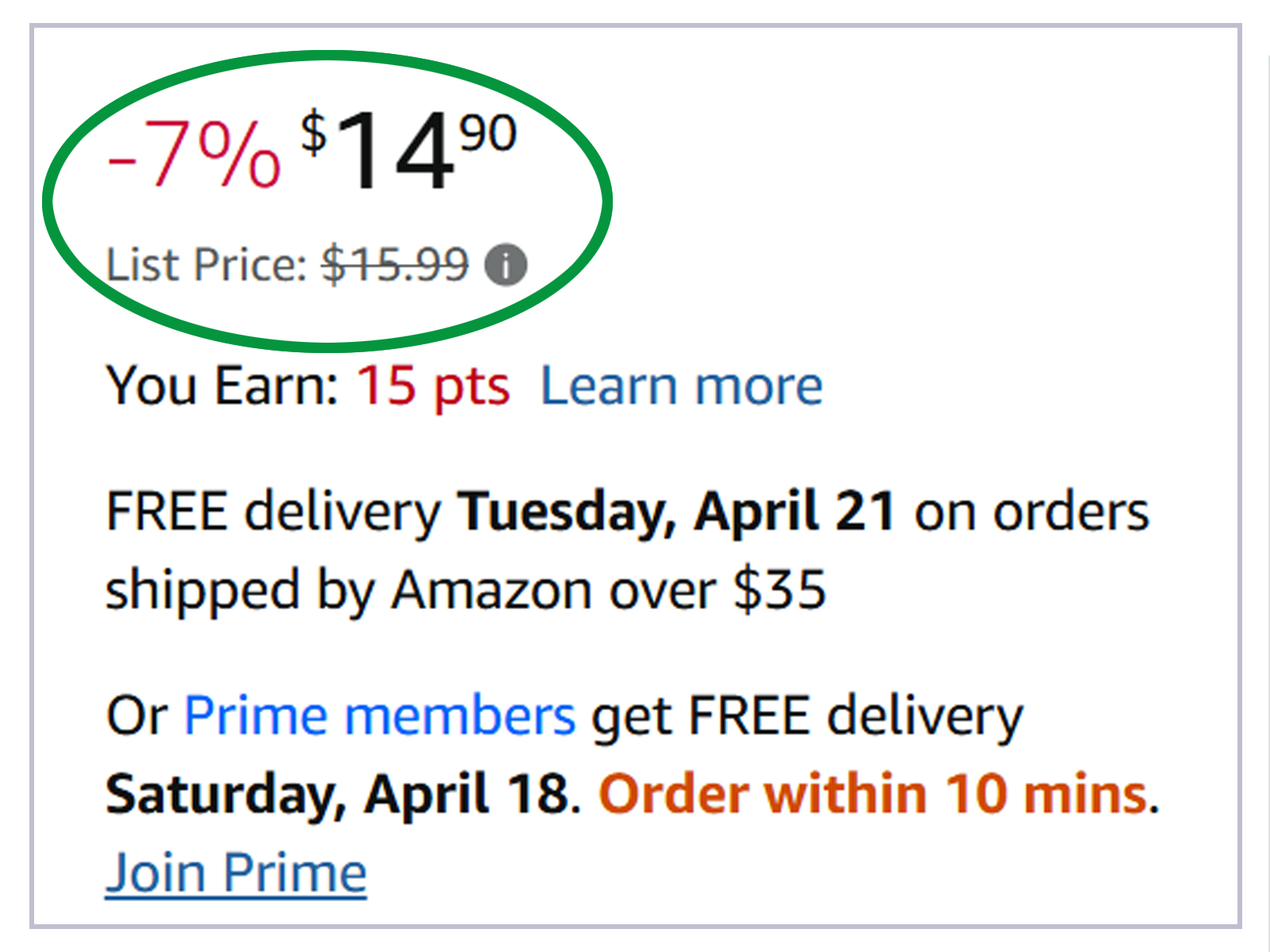
Every now and then, authors publishing on KDP get a small but meaningful surprise. Their book appears on Amazon below the retail price (i.e., Amazon lowers the list price). A deal badge appears. Readers start noticing it more than they had before.
And the first instinct is usually to ask what it means.
Is it random? Is it a promotion? Or is it something more encouraging, like the book is already gaining traction?
The answer is that it can be a mix of all of those things, and one of the most important explanations is also one of the most overlooked.
Sometimes, a book goes on sale because it is already selling.
Not always. Not universally. But often enough that it is worth understanding, especially when other signals are already present.
Sales activity can lead visibility shifts
When a book is moving at a steady pace, meaning consistent purchases over time, consistent clicks, and ongoing reader engagement, it begins to register inside the systems at Amazon as a performing title.
That performance becomes part of how the book is surfaced, tested, and expanded into wider visibility.
At that point, pricing adjustments, promotional placement, and algorithmic testing often appear around the book. A temporary price drop becomes one of the ways the system explores what happens when attention increases.
Momentum shows up first. The sale follows.
Reviews strengthen visibility

A book that exceeds 50 reviews signals sustained reader engagement. It reflects readers finishing the book and responding strongly enough to share feedback.
That level of engagement becomes part of how a book is recognized within the ecosystem at Amazon.
Reviews act as confirmation that readers are connecting with the work. That connection plays a direct role in how often the book is surfaced, recommended, and placed into discovery pathways.
A sale reflects active reader response
In publishing ecosystems like Amazon and within distribution tools such as Kindle Direct Publishing, pricing shifts often align with real reader behavior.
That behavior includes:
- Steady organic sales
- Strong conversion rates
- Consistent search visibility
- Ongoing reader engagement
- And a growing body of reviews
When those signals come together, a book becomes part of active testing cycles designed to expand reach and amplify what is already working.
A sale becomes one expression of that amplification.
The system responds to reader behavior
It’s helpful to think of the system at Amazon as responsive rather than symbolic:
- It observes how readers interact with books.
- It notices when engagement rises.
- It adjusts visibility, placement, and pricing behavior to extend that engagement further.
A price drop is one of the tools used to explore how far that engagement can go.
What this means for authors
For authors, a sale is best understood as a moment inside a larger pattern of activity.
When a book is already gathering reviews, already moving steadily, and already showing reader engagement, a temporary price change at Amazon often aligns with that momentum.
It reflects a book that is already circulating and already reaching readers.
What about royalty payments?
Authors who publish on KDP’s platform may wonder how the discounted sale price will affect their royalty payments. It depends. For KDP Select books (titles that are exclusive to Amazon and unavailable through other distribution platforms such as IngramSpark or Lulu), you do still earn your royalty percentage on the list price you set — not the discounted price Amazon shows. So if Amazon discounts your $14.99 paperback to $9.99, your royalty is still calculated on $14.99. Amazon absorbs the difference.
For non-KDP Select titles, the situation can vary, so it’s worth double-checking your royalty statements when you notice a discount.
A moment worth recognizing
When a book reaches this stage, it is operating in a space where readers are actively finding it, engaging with it, and sharing their responses.
That shift matters. It reflects movement from discovery into ongoing readership.
Congratulations to Dan Cohen
A warm congratulations to Dan Cohen, author of the memoir, Awakenings in Real Life, which is currently experiencing exactly this kind of momentum and reader engagement.

With over 50 reviews and steady visibility, this moment reflects a book that readers are actively connecting with.
The connection shows up in the most meaningful way possible. Readers are not only discovering the book, they’re engaging with it, responding to it, and sharing that response through reviews and attention.
That is the real story here.
The bottom line
A book going on sale often reflects movement already in progress.
In this case, the most important signal isn’t the price change itself, but what surrounds it.
Interested in taking a look at Dan’s book? Click below:

Readers are finding Dan Cohen’s book. They’re reading it. And they’re connecting with it in a way that continues to build momentum.
And that connection is what brings the book forward.